
Product Description

Accessories
Accessories
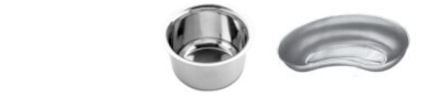
At Surgins, our Accessories category contains a large variety of important medical support tools needed for the smooth running of any surgical or medical setting.
You will find stainless-steel bowls, trays, safety pins and other useful tools in our range that help with all types of procedures.
All these accessories are designed and built to last, be effective and meet the strict needs of hospitals and clinics today.
They form the base for handling and sorting instruments, liquids and specimens during procedures. They are well-made so they keep their shape and hygiene after multiple sterilisation treatments. They are vital for holding the drapes and dressings in place, maintaining the sterility and stopping anything from contaminating the operative field.
Other than the main items, this group also includes instrument stands, kidney dishes, gallipots and measuring jugs, all made for different aspects of surgery.
These gadgets improve how the operating room works, keep things organised and make the area more efficient. For example, surgical tools are stored in instrument stands and trays so they are close at hand and gallipots and kidney dishes are used for storing or holding small items or liquids.
Every accessory is made with both ease of use and minimum risk to the user in mind.
The use of durable stainless steel in these products ensures they will last and still be suitable for professional cleaning and sterilisation.
No matter if these accessories are used in hospitals, clinics or outpatient centres, they are needed for a well-organised, hygienic and efficient operating room.
Supports for different surgeries help ensure the safety and success of patients.This range is trusted by healthcare professionals because Surgins UK always focuses on quality and new ideas in everything they do.
Dental
Dental
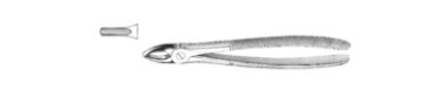
At Surgins, dental category is designed to supply dental professionals with the right tools for performing many different dental procedures.
There are specific forceps in the collection, each created for working on incisors, premolars, molars and roots to meet the various challenges these teeth have.
Dental surgeons, oral health practitioners and specialists performing extractions, restorations and routine care cannot do without these instruments.
In this range, the extracting forceps are carefully made to give you a good grip on the tooth, enough leverage and full control, protecting the surrounding tissues and ensuring a smooth, safe procedure. Each type of forceps is designed with a unique beak and handle to suit the shapes and locations of teeth from the front to the back.
Beyond extraction forceps, the category may also include elevators, root tip picks, and other specialised dental tools that support a wide array of procedures, from simple extractions to complex oral surgeries.
Because they are made from stainless steel, they are impervious to rust and can last a long time, even after strong sterilisation in dental settings.
Surgins’ dental instruments are designed to be ergonomic, giving users comfortable grips that minimise arm fatigue during extended work. Because of precision engineering, every instrument gives the same dependable results, making it easier for dental professionals to be precise and accurate.
It is very important that patients are comfortable and safe, and Surgins’ dental tools are made to reduce distress, lower procedure time and encourage fast recovery. Because the instruments are smooth and well-made, they are less likely to hold debris, which helps keep infections under control and supports patients’ health.
No matter if you need general dental care, an urgent extraction or more advanced oral surgery, Surgins UK’ Dental Instruments provide the quality, choice and trust dentists require. Because they are designed for innovation and quality, these tools allow doctors and nurses to provide top-level care to their patients.
Electro
Electro

At Surgins, Electro-Surgical Instruments category includes up-to-date devices that provide precision, greater efficiency and safety to surgical procedures.
The high-frequency electrical energy in these instruments allows surgeons to cut, stop bleeding and burn away tissue, all with better control and reduced harm to adjacent areas.
In the modern operating room, electro-surgical tools are essential because they are needed for careful tissue removal and blood control.
The group consists of monopolar and bipolar instruments that are chosen based on the particular surgery. Large-scale tissue removal is done best with monopolar instruments, but bipolar tools are safer for precise and local coagulation.
All Surgins’ electro-surgical equipment is made with superior materials for good conductivity, excellent durability and simple sterilisation.
The combination of better insulation and ergonomic features keeps users safe and comfortable, lowering chances of burns or tiredness while using for a long time.
They are used in various fields such as general surgery, gynaecology, urology and ENT, where handling tissues with accuracy is especially important. Because they have different power modes, interchangeable tips and work with most generators, they can be used in a range of procedures.
The top priority in surgery is patient safety and that’s why Surgins’ devices are made to reduce harm to the tissues, minimise bleeding and speed up recovery. Reliable operation of these machines makes them suitable for both minor and major surgeries, guaranteeing constant results and top care.
Because Surgins UK uses the newest technology and maintains high quality, the Electro-Surgical Instruments category helps surgeons achieve better outcomes confidently and efficiently.
Forceps (Clamp)
Forceps (Clamp)

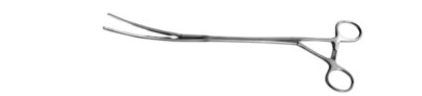
At Surgins, Forceps (clamp) is a surgical instrument used to grasp, hold, compress, or clamp tissue, blood vessels, or other objects during surgical procedures.
These instruments are commonly made of stainless steel and come in a wide variety of shapes and sizes depending on their specific use.
Surgins has a wide selection of surgical Forceps (clamps), which has common features of a Locking mechanism (ratchet) to hold tissue or vessels in place without continuous pressure from the surgeon, Finger rings for controlled handling, Serrated or smooth jaws depending on whether the tissue needs to be held firmly or gently.
Surgins Forceps (Clamps) are used in Surgery for Haemostasis (stopping bleeding), Tissue manipulation, Holding sutures or gauze, Dissection assistant and Anastomosis and Resection which require the use of specialized clamps.
Surgeons must keep their surgical tools up to date. In addition, the instruments must be high-quality to prevent any errors during surgery. As a result, surgeons require dependable clamps which ‘Surgins’ is determined to.
In 1903, at the Berlin University Hospital’s Department of Surgery, A surgeon, Edmund Höpfner invented this clamp. As part of his doctoral thesis, he performed end-to-end anastomoses of divided arteries in dogs. Until the 1960s, the Höpfner clamp was widely used in Germany.
Clamps have evolved significantly over time. As a result, various types of vascular clamps are now available for different applications.
These clamps are commonly used in cardio-Vascular and Thoracic surgery.
Surgical clamps are thus an essential part of surgeons’ toolkits. Clamps serve a variety of functions for surgeons, primarily blocking the blood vessels. Furthermore, these have evolved significantly over time and are available in many types.
Surgins UK offer high-quality clamps in many different variations to meet your surgical requirements with provision of Customisation and Innovation.
Forceps (Tweezer)
Forceps (Tweezer)
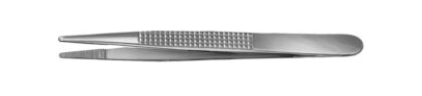
At Surgins, Tweezers (Forceps) also known as thumb forceps, pinning forceps, spring forceps are an extension of our fingers used by compression between your thumb and forefinger which allow us to grab, grip, place, remove or hold items that are too small or delicate for our fingers to manipulate.
These instruments with fine, pointed tips that allow precise grasping of delicate tissues with minimal damage. They are non-ratchet style. For example, you could use thumb forceps to hold or move tissue during surgery or to move dressings.
Simple pincers made of two arms joined at one end.
Slant-tip or pointed-tip tweezers (for eyebrow grooming, electronics, etc.)
Flat or rounded tip tweezers (for gentle handling)
The size and shape of the items we grab, grip, place or hold necessitate the need for a variety of tweezer tip styles and shapes.
They are categorized by the presence and type of teeth that are designed for the specific tissue they are intended to hold.
Slanted tip tweezers for grooming. These are the type you probably use the most. …
Curved and oblique-tip tweezers for eyelashes. …
Precision tweezers for splinters. …
Their primary purpose is to grasp, retract, or stabilize tissue. They may also be used to pack or extract sponges, pass ligatures, and stabilize and manipulate needles during suturing.
They are primarily used in microsurgery, suturing, or handling structures in hard-to-reach areas.
Surgins Forceps Tweezer (Thumb Forceps) are available with a variety of tips.
The tips may be flat, serrated, cupped, ringed, grooved, diamond dusted or have teeth. The tips may also be straight, curved or angled.
Serrated tweezers (thumb forceps) are designed for use with tissues. The serrations or teeth actually cause less damage than flat forceps, because it requires less pressure to maintain a firm grip.
Use smooth or cross-hatched forceps for removing sutures, moving dressing or other drapes.
Surgins UK offer high-quality Tweezers in many different variations to meet your surgical requirements with provision of Customisation and Innovation.
Left Handed
Left Handed Surgical Instruments

At Surgins, Left-Handed Surgical Instruments are specially designed tools for surgeons who are Left-Handed. (approx. 10% of the population).
These instruments are not merely mirror images of right-handed ones — they are re-engineered so that they function ergonomically and effectively in a left-handed user’s hand.
Key Differences Between Right- and Left-Handed Instruments
The instruments with laterality either have ratchets (some clamping, grasping and retracting instruments) or blades (cutting).
Blade or Scissor Alignment: In left-handed scissors or needle holders, the blade or jaw on the left is on top, allowing the user to see the cutting edge or needle clearly.
Ratchets and Locks: The ratchet mechanism (in instruments like haemostats or needle holders) is reversed, allowing easy locking and unlocking with the left thumb.
Ergonomics: Handles are contoured for left-hand grip, improving control and reducing fatigue.
Cutting/Shearing Action: Proper shearing occurs only when the blades are aligned for the dominant hand. Right-handed scissors used by left-handed users often push tissue instead of cutting cleanly.
Manufacturing left-handed equipment takes longer. The standard manufacturing process is set up to produce right-handed equipment as they form the majority of sales.
For left-handed equipment, stamped blanks cannot be passed through the normal process. Instead the ratchet or blade has to be individually cut and welded into the correct position.
Provision of left-handed equipment costs extra money. It is not expensive when compared to other hospital expenditures.
Especially useful in microsurgery, plastic surgery, ENT, and ophthalmology, where fine control is critical.
The more precise the task for which they are used, the greater need there is for tailoring them to the surgeon’s handedness. Where this is the case, the best instruments for a left-handed surgeon are those designed for left-handed use.
Surgins UK offers an extensive range of Left Handed surgical instruments which are all fine, durable, and sharp & embossed with Surgeon’s name (Signature Instruments), provision for Customisation & Innovation.
MIS (Minimally Invasive Surgery)
MIS (Minimally Invasive Surgery) Surgical Instruments
At Surgins, Minimally Invasive Surgery (MIS), also known as Keyhole Surgery, uses specialized surgical instruments, designed for MIS, allowing surgeons to operate through small incisions with the smallest possible cuts. These instruments, often longer and thinner than traditional surgical tools.
- Length and Diameter:
- Keyhole instruments are significantly longer and thinner than those used in open surgery. This allows them to be inserted through small incisions (ports) and manoeuvred within the body to reach the surgical site. The diameter of these instruments is typically much smaller, often less than half an inch.
- Specialized End-Effectors:
- Keyhole instruments have specialized tips and working ends designed for specific tasks like grasping, cutting, coagulating, and suturing. These instruments may have articulation (movement) at the tip to enhance manoeuvrability within the body cavity.
- Cannulas (Trocars)
- Small, hollow tubes inserted through the incisions to provide access for other instruments. It allows surgeons to introduce and manipulate instruments within the body cavity while maintaining a closed environment.
- Camera and Visualization (Endoscope)
- Keyhole surgery relies heavily on visualization, with a camera (endoscope) inserted through a separate port. The images from the camera are displayed on a monitor, providing the surgeon with a magnified view of the surgical area.
- Specialized endoscopes are used for different body parts, like Laparoscope for the abdomen, Thoracoscope for the chest and Arthroscope for joints.
- Ergonomics and Precision:
- Keyhole instruments are designed to be ergonomic for the surgeon, allowing for precise movements and control.
Surgins UK offers an extensive range of MIS surgical instruments which are specified to Thoracoscopic Cardio-Thoracic Surgery, Laparoscopic Abdominal/ Urological/ Gynaecological Surgery and Arthroscopic Orthopaedic Surgery.
Needle Holder
Needle Holder
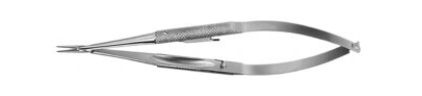
At Surgins, Needle Holder (also known as a needle driver) is a surgical instrument used by surgeons to hold a suturing needle for closing wounds during suturing and surgical procedures.
Components:
- Jaws: Its jaws lie at the end of the fulcrum and can be narrow or thick. The shape of the jaws can be straight or curved. They can also be smooth or serrated, depending on their use. Tungsten Carbide inserts in the jaws provide more precision and control during surgery.
- Joints
- Shanks
- Finger ring or Spring handles: The handles can also be straight or curved. Spring handles allow the user maximum results with a minimum rotation of the wrist and hand.
- Ratchet lock mechanism: its ratchet lock mechanism keeps the needles in place.
Material: Made of stainless steel and Titanium (for durability and sterilization).
Common Types
Coarse 0.65mm – For powerful needle holder patterns and wire twisters.
Standard 0.5mm – Used for needles 3-0 and larger.
Fine 0.4mm – For needles and sutures between 4-0 and 6-0.
Micro 0.2-0.3mm – For delicate needles and sutures between 7-0 and 10-0.
Smooth – For suture of 6-0 and finer.
Tungsten Carbide Needle Holders For a long lasting, secure grip, greater durability and longevity. Bevelled edges prevent the suture from snagging.
Needle Holders with Scissor– Gillies, Olsen Hegar
Surgins UK offer different variations of Needle Holders, each varying in style, size, and feature. The availability of the different variations makes selecting the right tool easy for the surgeon with provision of Customisation and Innovation.
Retractor
Retractor

Surgins Retractor is a surgical instrument to hold back tissues, organs, or muscles during a surgical procedure to provide better visibility and access to the area being operated on,to prevent injury or obstruction and to help ensure that the surgeon can work efficiently and safely.
Types of Retractors:
Retractors come in a vast array of shapes, sizes, and designs, often tailored to specific surgical specialties and procedures and body area being worked on
Two commonest Retractors are Handheld & Self-Retaining
- Handheld Retractors: These are manually held by the surgeon or surgical assistant to maintain retraction.
- Self-Retaining Retractors: These retractors can be clamped or secured in place, freeing the surgeon’s hands or those of the surgical assistant.
- Material: Retractors are usually made from stainless steel or other durable, non-corrosive materials to withstand repeated sterilization and use.
Importance of Retractors
- Improved visibility: Retractors allow surgeons a clear view of the surgical field.
- Enhanced access: They help hold back tissues and organs, providing better access to the surgical site and great visual access for students
- Protection: Retractors can also help protect surrounding tissues and organs from damage during the surgical procedure.
- Increased efficiency: Self-retaining retractors free up assistants and surgeons, leading to more streamlined procedures.
- Reduced tissue trauma: Newer retractor designs aim to minimize tissue damage during retraction.
- Better patient outcomes: By facilitating clear visibility and access, retractors contribute to safer and more effective surgeries.
- Promotes Surgeon’s Ergonomics: Manual retraction, a task performed to expose the surgical site, poses a high risk for musculoskeletal disorders that affect the hands, arms, shoulders, neck, and back.
Surgins UK offers a comprehensive range of Handheld & Self-Retaining Retractors of all surgical disciplines with a provision to customisation & innovation.
Scalpel Handles
Scalpel Handles
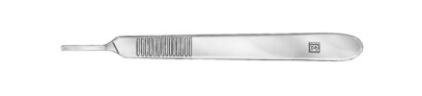
At Surgins, Scalpel is a small, very sharp-bladed surgical knife used for making precise incisions in tissue. It’s a fundamental tool in various fields, including surgery, anatomy, podiatry and various handicrafts.
Surgical scalpels consist of two parts, a blade and a handle. The handles are often reusable, with the blades being replaceable. In medical applications, each blade is only used once (sometimes just for a single, small cut).
Scalpel Handle:
The handle is also known as a “B.P. handle”, named after Charles Russell Bard and Morgan Parker, founders of the Bard-Parker Company.
Reusable handle is usually made of Stainless Steel.
The handle of surgical scalpels come in several basic types.
The first is a flat handle used in the #3 and #4 handles. The #7 handle is more like a long writing pen, rounded at the front and flat at the back. A #4 handle is larger than a #3. #5 handles are also common, and are round, with a patterning to ensure a non-slip grip.
Scalpel Blades:
Scalpels come with different blade shapes and sizes (identified by numbers like #10, #15, etc.) to suit specific surgical needs. Blades are manufactured with a corresponding fitment size so that they fit on only one size reusable handle.
Scalpel blades are usually made of hardened and tempered steel, stainless steel, or high carbon steel
A lancet has a double-edged blade and a pointed end for making small incisions or drainage punctures.
There are various scalpel blade removers on the market that allows users to safely remove blades from the handle, instead of dangerously using fingers or forceps.
Surgins UK offers a broad range of Re-usable Scalpel handles which address most of the surgical needs.
Scissors
Scissors

At Surgins, surgical scissors are indispensable tools in the field of surgery, designed for cutting tissues, sutures, and various materials during surgical procedures.
They come in a wide variety of shapes, sizes, and designs, tailored to meet the specific needs of various surgical disciplines, from general surgery to specialised areas like neurosurgery, ophthalmology, and gynaecology.
Mechanical types
There are two main mechanical types of scissors used in surgery:
- Ring scissors, which look and function much like standard utility scissors with ring finger loops
- Spring scissors used mostly ineye surgery or microsurgery. The handles end in flat springs connected with a pivot joint. The cutting action is achieved by pressing the handles together. As the pressure is released, the spring action opens the jaws.
Configurations
- Blunt/blunt blades
- Blunt/sharp blades
- Sharp/sharp blades
Surgical scissors may have straight or curved blades, depending on the surgical task at hand.
Some scissors also come with serrated edges, providing a better grip and control when cutting tissues.
Supercut
Two black bows on a surgical scissor designate ‘Supercut’.
Supercut is one micro-serrated edge and one ultra-sharp edge. Often these scissors may also be referred to as ‘Stille’, as it is thought that Stille introduced this edge originally.
The Supercut offers a grip and cut
Gold Bows
Gold bows on a surgical scissor is an indication that the instrument has tungsten carbide in its jaws or blades.
This tungsten carbide makes the scissor more robust and harder.
Titanium and stainless steel are commonly used materials, offering durability, resistance to corrosion, and ease of maintenance.
The quality of surgical scissors is crucial, as they must remain sharp and durable to withstand repeated sterilisation processes.
Advancements in material technology and design have improved the ergonomics and overall efficiency of surgical scissors, contributing to enhanced surgeon comfort and reducing fatigue during lengthy procedures.
Additionally, innovations in manufacturing processes and blade coatings have further extended the lifespan of these instruments.
Surgical scissors play a vital role in achieving optimal surgical outcomes.
Surgeons and their teams rely on these instruments for precise and controlled cutting, thereby contributing to the overall safety, success, and efficiency of surgical procedures. Their versatility, precision, and constant development make surgical scissors an essential element in modern healthcare and surgical practice.
Surgins UK offers a comprehensive range of surgical scissors of all surgical disciplines with provision of Customisation and Innovation.
Single Use
Single Use Surgical Instruments

At Surgins, Single-use surgical instruments (also known as disposable surgical instruments) are tools designed to be used once during a surgical procedure and then discarded. They are pre-sterilized and packaged to maintain aseptic conditions and reduce the risk of cross-contamination or infection.
Benefits
Infection Control: Eliminates risk of disease transmission due to inadequate sterilization.
Time-Saving: No need for cleaning, sterilizing, or reprocessing.
Cost-Efficient in Some Settings: Avoids costs associated with sterilization, repair, and tracking reusable instruments.
Guaranteed Sharpness and Functionality: Fresh instruments every time.
- Efficiency:
Eliminating the cleaning and sterilization process saves time and resources.
- Convenience:
Instruments are always ready and can simplify budget planning for healthcare facilities.
- Patient Safety:
Reduces the risk of cross-contamination between patients and ensures instruments are always fresh and sharp.
Typical Use Cases
- Minor surgeries or procedures
- Emergency departments
- Military or field operations
- Developing countries or remote locations
- Procedures with high contamination risk (e.g., infected wounds)
Surgins UK offers a broad range of single use surgical instruments and surgical packs for various disciplines with provision of customisation and innovation.
Titanium
Titanium Surgical Instruments

Titanium surgical instruments are specialized surgical tools made from titanium or titanium alloys. They are commonly used in surgeries due to their unique properties.
Key Benefits
Lightweight: Titanium is approximately 40% lighter than stainless steel, reducing surgeon fatigue during long procedures.
Corrosion Resistant: Titanium doesn’t rust or corrode, even when exposed to bodily fluids and sterilization processes. It is stain-free and temperature resistant to 430degC, making it an excellent choice for surgery.
Non-Magnetic: Safe to use in MRI environments because they do not interfere with magnetic fields. This is particularly important for surgeries involving imaging technologies.
Biocompatible: Titanium is highly biocompatible, meaning it rarely causes allergic reactions or tissue irritation.The metal resists bacteria, allowing medical staff to carry out procedures safely.
Strong and Durable: Despite being lightweight, titanium instruments are very strong and wear-resistant.
Gentle to handle: This unique material also features a diamond-dusted surface that makes them very gentle to handle.
Precision: Titanium surgical instruments improve the precision of the surgeon’s work. In addition to the aesthetic benefits, titanium reduces hand fatigue and improves hand-eye coordination.
Anodization: Titanium surgical instruments can be anodized to create a non-reflective surface, reducing glare under operating lights. Anodization also allows for a variety of colours, enhancing visibility and aesthetics.
Care and Sterilization: Titanium instruments require standard sterilization methods such as autoclaving, but their corrosion resistance means they maintain integrity over many sterilization cycles.
Applications: Neurosurgery, Ophthalmic surgery, Cardiovascular surgery, Orthopaedic surgery, Plastic and Cosmetic Surgery, Microsurgery, Dental surgery
Titanium surgical instruments are a preferred choice in modern surgery despite their cost due to their numerous advantages, making them essential tools for healthcare professionals.
Surgins UK offers a broad range of Titanium Surgical Instruments with provision of Customisation & Innovation.
Veterinary
Veterinary
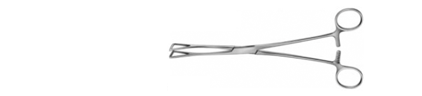
At Surgins, the primary differences between human and veterinary surgical instruments stem from the species, anatomical variation, and procedural requirements. While many instruments are similar in function and design, some are specially adapted for veterinary use.
Key Differences:
Design & Size
Typically standardized to human anatomy (e.g. adults or paediatrics). Vary significantly in size and shape to accommodate a range of species (from small rodents to large animals like horses or cattle).
Material & Durability
High-grade surgical stainless steel; made for repeated sterilization and fine control. Similar materials, but often more rugged for field use; some instruments for large animals may be extra durable or longer.
Cost Considerations
Often more expensive due to stricter regulatory standards. Generally more cost-effective; some instruments are less refined, especially for field or farm use.
Specialized Tools
Includes species-specific tools (e.g., equine dental floats, castration tools, emasculators, hoof knives).
Sterilization Needs
Also sterilized, but field instruments may have portable or chemical-based sterilization due to remote conditions.
Volume & Frequency of Use
May be used across many animals quickly in a clinic or farm setting—efficiency is prioritized.
Regulatory Oversight
Subject to veterinary regulatory standards (which can be less stringent depending on the country).
Veterinary instruments are adapted for anatomical variety, species-specific needs, and practical field use. The differences reflect the diversity of animals treated and the environments in which veterinary surgeons operate.
Surgins UK offers a broad range of VETS surgical instruments/Procedure Packs with provision of Customisation & Innovation.